
Mandible reduction and cheekbone reduction are two facial bone contouring procedures that can be combined to improve the width of the lower face and midface. The two procedures may be performed at the same time when both the mandibular angles and cheekbones contribute to a wide, angular, or disproportionate facial appearance.
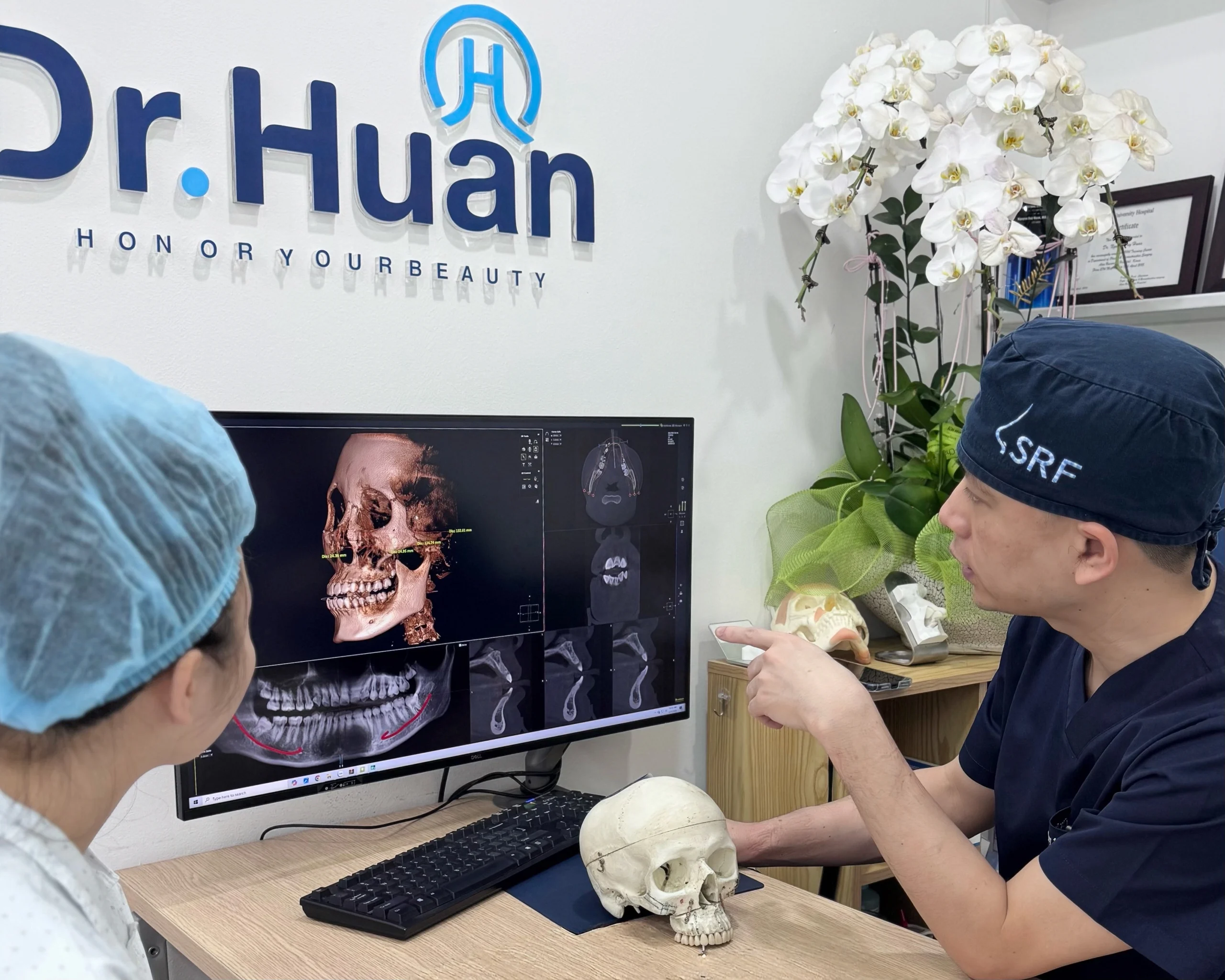
The surgical approach is determined based on bone structure, soft tissue, the width of each facial region, and the relationship between the cheekbones, jawline, and chin. Through clinical examination and 3D CT analysis, the surgeon can determine an appropriate degree of correction for each area, with the goal of achieving balanced and harmonious facial proportions.

What are mandible reduction and cheekbone reduction?
Mandible reduction combined with cheekbone reduction involves two facial bone contouring procedures that target different areas of the face.
Mandible reduction primarily targets the mandibular angles and lower border of the mandible. The procedure is performed to correct wide, prominent, or square mandibular angles, thereby improving the contour and width of the lower face.
Cheekbone reduction targets the zygomatic bone and zygomatic arch to reduce excessive projection or width of the cheekbones. Depending on the individual bone structure, the surgeon determines the appropriate osteotomy site and degree of bone repositioning to improve the contour of the midface.
Comparison between cheekbone reduction and mandible reduction
| Criteria | Cheekbone reduction | Mandible reduction |
|---|---|---|
| Treatment area | Midface: zygomatic body and zygomatic arch | Lower face: mandibular angle |
| Technique | Limited dissection and soft tissue release combined with a customized L-shaped osteotomy, allowing 360-degree bone repositioning to an appropriate position and angle, followed by fixation with titanium plates and screws | Uses the Piezotome ultrasonic bone-cutting system to contour the mandibular angle according to the surgical plan |
| Incision | Mainly intraoral, combined with a small access incision near the zygomatic arch | Intraoral, minimizing visible external scarring |
| Goal | Reduce cheekbone projection and width while improving midface contours | Correct wide, prominent, or square mandibular angles to create a more balanced lower face |
| Assessment and planning | 3D CT helps evaluate cheekbone projection, width, bone morphology, and bilateral symmetry to determine the osteotomy site, direction of repositioning, and appropriate degree of correction | 3D CT helps evaluate mandibular morphology, mandibular angle width, the lower border of the mandible, and its relationship with the inferior alveolar nerve canal to determine the osteotomy line and appropriate extent of correction |

Should mandible reduction and cheekbone reduction be performed at the same time?
Cheekbone reduction and mandible reduction can be performed at the same time, particularly in patients who have both high or wide cheekbones and broad, prominent mandibular angles. When skeletal structure affects both the midface and lower face, combining the two procedures allows the surgeon to assess and contour both areas within a single surgical plan rather than treating each region separately.
From an anatomical and aesthetic perspective, the zygomatic bone and zygomatic arch play an important role in determining midface width and contour, while the mandibular angle and lower border of the mandible define the lower face. Together, these structures create a continuous facial contour from the cheekbones to the jawline and chin. When both areas are wide, 3D CT can be used to assess cheekbone projection, mandibular angle width, the direction of bone repositioning, and the extent of mandible reduction required to achieve better balance between the midface and lower face.
The role of CT imaging in evaluating bone structure is also reflected in research by Nguyen Duy Huan, MD, MSc, and colleagues on reduction malarplasty, published in The Journal of Craniofacial Surgery. The study used CT imaging before and after surgery to measure and evaluate changes and displacement of the zygomatic bone. This also demonstrates the value of imaging-based assessment in surgical planning and outcome evaluation rather than relying solely on external appearance.
When both procedures are indicated, performing mandible reduction and cheekbone reduction at the same time may offer several advantages:
- Coordinated correction of facial regions: The cheekbones and mandibular angles can be planned together, helping the surgeon manage the width of both the midface and lower face while creating a smoother transition from the cheekbones to the jawline.
- One surgical and recovery period: Both areas are treated during the same operation, allowing the patient to undergo one general anesthetic and one overall recovery period rather than two separate surgeries.
- Individualized degree of correction: The extent of cheekbone reduction and mandible reduction can be planned in relation to each other using 3D CT, avoiding excessive focus on reducing one area without considering overall facial proportions.
Whether mandible reduction and cheekbone reduction should be performed together depends on each patient’s actual facial structure. If facial width is primarily caused by either the cheekbones or mandibular angles, only the relevant area may need correction. When both structures contribute to facial width and contour, a combined surgical plan may be considered.
Suitable candidates and cases requiring careful evaluation
Mandible reduction and cheekbone reduction directly involve the facial skeleton and are performed under general anesthesia. Therefore, facial anatomy and overall health should be carefully evaluated, with appropriate preoperative testing before surgery.
Potential candidates include:
- Adults aged 18 or older whose facial bones have reached relative skeletal maturity.
- People with prominent or laterally wide cheekbones that create a broad or angular midface.
- People with wide, prominent, or square mandibular angles that make the lower face appear broad or disproportionate.
- People with both wide cheekbones and prominent mandibular angles who may benefit from assessment for combined surgery.
- People with facial skeletal asymmetry who require evaluation of the underlying cause and severity before treatment planning.
- People who are medically suitable for general anesthesia and surgery following preoperative assessment.
Cases that may require postponement or careful medical evaluation include:
- Patients with uncontrolled cardiovascular disease, hypertension, diabetes, coagulation disorders, or other systemic conditions.
- Patients with active infections or health conditions that make surgery temporarily unsuitable.
- Pregnant women; breastfeeding women should discuss the appropriate timing of surgery and related considerations with their doctor.
- Patients taking medications or with medical histories that may affect anesthesia, blood clotting, or recovery.
- Patients whose expectations are not aligned with the realistic possibilities of surgery and who therefore require thorough counseling regarding the goals and limitations of the procedure.
Combined cheekbone reduction and mandible reduction procedure
The combined cheekbone reduction and mandible reduction procedure at Dr Huan consists of eight main steps:
- Consultation and facial assessment: Evaluate the cheekbones, mandibular angles, jawline, and overall facial proportions.
- 3D Cone Beam CT: Assess bone structure, the inferior alveolar nerve canal, and other relevant anatomical structures.
- Surgical planning: Determine the osteotomy sites, direction of cheekbone repositioning, and extent of mandible reduction.
- Preoperative health assessment: Perform necessary tests and evaluate suitability for anesthesia and surgery.
- General anesthesia: The patient is monitored by the anesthesia team throughout the procedure.
- Cheekbone reduction: Perform the planned osteotomy, reposition the cheekbones, and secure them with titanium plates and screws.
- Mandible reduction: Contour the mandibular angles and lower border of the mandible according to the surgical plan using Piezotome.
- Closure and postoperative monitoring: Inspect the surgical areas, close the incisions, and monitor postoperative recovery.
How long does recovery take after mandible reduction and cheekbone reduction?
Recovery occurs in stages and may vary from person to person.
During the first few days: Swelling, tightness, and bruising may occur around the cheeks, mandibular angles, and surrounding tissues. The degree of swelling depends on the extent of surgery and the individual’s response.
During the first 1-2 weeks: Swelling generally begins to subside. Patients should continue wound care, maintain oral hygiene, follow dietary instructions, and take medications as prescribed.
Over the following weeks: Normal daily activities can gradually resume as swelling and discomfort improve. However, facial contours at this stage should not be considered the final result.
Over the following months: Bone and soft tissue continue to heal and stabilize. Facial contours may gradually change as residual swelling subsides and the soft tissues adapt to the new skeletal structure.
The actual recovery time depends on the extent of mandible reduction, the cheekbone reduction technique, individual healing characteristics, and postoperative care.
Frequently asked questions about mandible reduction and cheekbone reduction
Does a wide face always require both mandible reduction and cheekbone reduction?
No. A wide or broad face may be related to the cheekbones, mandibular angles, masseter muscles, cheek fat, submandibular fat, soft tissue, chin structure, or a combination of these factors. The underlying cause should be identified before deciding on mandible reduction, cheekbone reduction, or a combination of both.
Do mandible reduction and cheekbone reduction always have to be performed together?
No. If facial width is primarily caused by the mandibular angles, mandible reduction alone may be considered. If the cheekbones are the main cause, cheekbone reduction alone may be sufficient. A combined approach may be considered when both structures contribute to facial width and contour.
Is it dangerous to have mandible reduction and cheekbone reduction at the same time?
Both procedures involve direct surgical modification of the facial bones and are performed under general anesthesia. When combined, the surgical extent is greater, so careful evaluation of facial anatomy, overall health, and the planned degree of correction is important. Preoperative examination, 3D CT imaging, health screening, and individualized surgical planning are required.
Can mandible reduction and cheekbone reduction make the face smaller?
They can reduce facial width when the underlying cause is related to the cheekbones and mandibular angles. The degree of change depends on the original facial structure, facial proportions, and the appropriate extent of correction for each patient.
Do mandible reduction and cheekbone reduction leave scars?
Mandible reduction is performed through an intraoral approach, minimizing visible external scarring. For cheekbone reduction at Dr Huan, the surgical approach is mainly intraoral, combined with a small access incision near the zygomatic arch.
How long does it take for the face to look natural after mandible reduction and cheekbone reduction?
Swelling usually decreases gradually during the first few weeks, while the bones and soft tissues continue to heal and stabilize over the following months. The time required for the face to look natural varies depending on the extent of surgery, individual healing characteristics, and postoperative care.
Can mandible reduction and cheekbone reduction be performed on men?
Yes. However, the surgical plan should be based on each patient’s facial characteristics and aesthetic goals. In male patients, the surgeon may preserve an appropriate degree of jaw width, mandibular angle definition, and facial contour so that the lower face becomes more balanced while maintaining masculine features.
Mandible reduction and cheekbone reduction can be performed at the same time when both the mandibular angles and cheekbones contribute to a wide, angular, or disproportionate facial appearance. However, not every patient with a wide face requires simultaneous correction of both areas.
The key is to identify the structures responsible for the facial characteristics while also evaluating the soft tissues and proportions between different facial regions. This allows the surgeon to determine whether mandible reduction, cheekbone reduction, or a combination of both is appropriate.
At Dr Huan, treatment planning begins with facial assessment and 3D CT analysis. Dr. Nguyen Duy Huan personally evaluates the cheekbones, mandibular angles, lower border of the mandible, and the relationship between different facial regions before developing an individualized surgical plan for each patient, with the goal of achieving overall facial balance rather than reducing every face according to the same template.
Every face requires an individualized treatment plan. If you are considering mandible reduction, cheekbone reduction, or a combination of both, a consultation with Dr. Nguyen Duy Huan can help identify the structures that may require correction and determine an appropriate approach for your facial anatomy.
WhatsApp +84 916 262 888 / +84 986 258 118
