
Mandible reduction and facelift surgery do not necessarily need to be performed together. However, combining the two procedures may be appropriate for patients who require both jawbone contouring and correction of sagging skin and soft tissues. Mandible reduction addresses a wide, square, or prominent mandibular angle, while facelift surgery repositions sagging facial tissues to improve jawline definition and signs of aging.
Whether these procedures should be combined depends on the patient’s bone structure, skin elasticity, degree of soft tissue sagging, and overall health. A surgeon must evaluate each case to determine whether the procedures should be performed simultaneously, separately, or in stages.

What are mandible reduction and facelift surgery?
Mandible reduction and facelift surgery are two cosmetic procedures that address different facial structures. Mandible reduction reshapes the lower jawbone, while facelift surgery focuses on correcting loose skin and sagging facial tissues.
Mandible reduction surgery
Mandible reduction is a surgical procedure that reshapes the mandibular angle to improve a square, wide, or prominent jaw, creating a slimmer and more balanced lower face.
The procedure is typically performed through an incision inside the mouth. The surgeon accesses and reshapes the mandibular angle and lower border of the mandible according to the surgical plan.
The extent of bone modification is determined by the patient’s skeletal anatomy and facial proportions, with the goal of achieving a well-defined, harmonious, and natural-looking jawline.
Facelift surgery
Facelift surgery is a cosmetic procedure designed to improve loose skin, wrinkles, and sagging facial tissues associated with aging.
Depending on the technique, the surgeon may release and reposition deeper supporting tissues to improve the contours of the cheeks and jawline. Excess skin is then adjusted appropriately after the underlying tissues have been addressed.
Unlike mandible reduction, facelift surgery does not alter the underlying bone structure. Instead, it focuses on improving the position and contours of facial soft tissues.
Does mandible reduction cause facial sagging?
Mandible reduction does not necessarily cause facial sagging. After the mandibular angle is reshaped, the surrounding soft tissues undergo a process of adaptation to the new bone structure. This process depends on skin elasticity, soft tissue characteristics, and the extent of surgery.
Patients with firm skin and good elasticity generally have a greater capacity for soft tissue adaptation. Conversely, if the skin is already loose or the underlying tissues have begun to sag, changes in the jawbone structure may make existing sagging more noticeable.
Several factors can influence soft tissue contours after mandible reduction:
- Age and skin elasticity: Skin with good elasticity generally adapts more favorably to changes in the underlying skeletal structure.
- Extent of bone reduction: The amount of bone removed or reshaped should be appropriate for the patient’s anatomy and facial proportions.
- Soft tissue condition: Loose skin, subcutaneous fat, and sagging supporting tissues can affect jawline definition after surgery.
- Recovery process: Swelling and temporary soft tissue changes may cause facial contours to remain unsettled during the first few months.
A study involving 104 patients, published in 2025 in Plastic and Reconstructive Surgery, evaluated soft tissue changes following mandibular angle reduction using a ramus-preserving technique. According to the reported findings, no statistically significant increase in lower facial soft tissue sagging was observed after six months of follow-up.
Therefore, evaluating the jawbone structure and the ability of soft tissues to adapt before surgery is essential for determining the appropriate extent of mandible reduction and whether a facelift should also be considered.
Should mandible reduction and facelift surgery be performed together?
Mandible reduction and facelift surgery may be performed simultaneously when both the mandibular angle and sagging facial tissues require correction. However, combining the two procedures is not necessary for every patient.
Who may benefit from combining mandible reduction and facelift surgery?
- A wide jaw accompanied by loose skin: The mandibular angle is prominent, creating a square or broad lower face, while the skin and soft tissues also show signs of sagging.
- Poorly defined jawline: A wide lower face caused by bone structure, combined with sagging soft tissues, makes the jawline appear less defined.
- Visible signs of facial aging: The patient has sagging tissues around the cheeks and jawline, along with a separate indication for mandibular angle reduction.
Combining the procedures should only be considered when both surgeries are clinically indicated and the patient’s health meets the necessary surgical requirements.
When is mandible reduction alone sufficient?
- Firm skin with good elasticity: The soft tissues are more likely to adapt favorably to changes in the underlying bone structure.
- No significant soft tissue sagging: The main cause of an unbalanced jawline is a prominent mandibular angle rather than loose skin.
- Younger patients without noticeable signs of aging: The skin and soft tissues remain firm, with no clear indication for additional facelift surgery.
Age or the extent of bone reduction alone should not determine whether a facelift is necessary. The surgeon must evaluate the patient’s actual soft tissue condition before recommending treatment.
When should the two procedures be performed in stages?
- Soft tissue adaptation needs to be monitored: The surgeon may prefer to reassess the jawline after swelling subsides and the soft tissues become more stable.
- The patient’s health is not suitable for combined surgery: Certain risk factors may make performing both procedures during a single anesthetic session inadvisable.
- Extensive surgical intervention is required: Staging the procedures may help manage surgical duration and the overall extent of treatment.
- The need for a facelift remains uncertain: The soft tissues may need to be reassessed after recovery from mandible reduction.
The timing of the second procedure depends on bone healing, soft tissue stability, and the surgeon’s clinical assessment.

Benefits of combining mandible reduction and facelift surgery
When appropriately indicated, combining these procedures may offer several aesthetic and treatment-related benefits:
- Addressing two causes of facial imbalance: Mandible reduction reshapes the mandibular angle, while facelift surgery corrects sagging soft tissues.
- Improving jawline definition: Combining bone contouring with soft tissue repositioning may create a more defined, refined, and harmonious jawline.
- Reducing visible signs of aging: Facelift surgery can improve loose skin, wrinkles, and sagging tissues that mandible reduction alone cannot address.
- Combining recovery periods: Performing both procedures together may allow patients to undergo one anesthetic session and a shared recovery period rather than two separate surgeries.
However, combined surgery involves more extensive intervention and may increase swelling, discomfort, and postoperative care requirements. The potential benefits must be weighed against the risks and each patient’s ability to recover.
Is it safe to undergo mandible reduction and facelift surgery at the same time?
Mandible reduction and facelift surgery can be performed together in appropriately selected patients. However, the benefits and risks of combining these procedures must be carefully evaluated.
Because these surgeries involve both bone and soft tissue structures, combining them may increase surgical duration and postoperative monitoring requirements.
Important factors to consider include:
- Overall health: A comprehensive medical evaluation is necessary to assess anesthesia suitability and identify potential surgical risk factors.
- Surgical duration: Combining the procedures may prolong anesthesia compared with performing either surgery alone.
- Extent of surgery: Bone reshaping and soft tissue dissection must be carefully planned, with particular attention to surrounding blood vessels and nerves.
- Potential complications: Risks may include bleeding, hematoma, infection, nerve injury, jawline contour irregularities, and wound-healing problems.
- Postoperative care: Both the jawbone and facial soft tissues require monitoring after surgery. Patients must follow instructions regarding medication, hygiene, and follow-up appointments.
The safety of combining mandible reduction and facelift surgery depends on the patient’s health, the extent of intervention, surgical duration, and the ability to manage potential risks.
The surgeon must carefully weigh the benefits and risks before deciding whether to perform both procedures simultaneously or in separate stages.
Combined mandible reduction and facelift surgery at Dr Huan
At Dr Huan, combined mandible reduction and facelift surgery is planned around the coordinated reshaping of the jawbone and repositioning of facial soft tissues. This approach aims to improve a prominent jaw, address facial sagging, and create a slimmer, more defined jawline that complements the patient’s overall facial proportions.
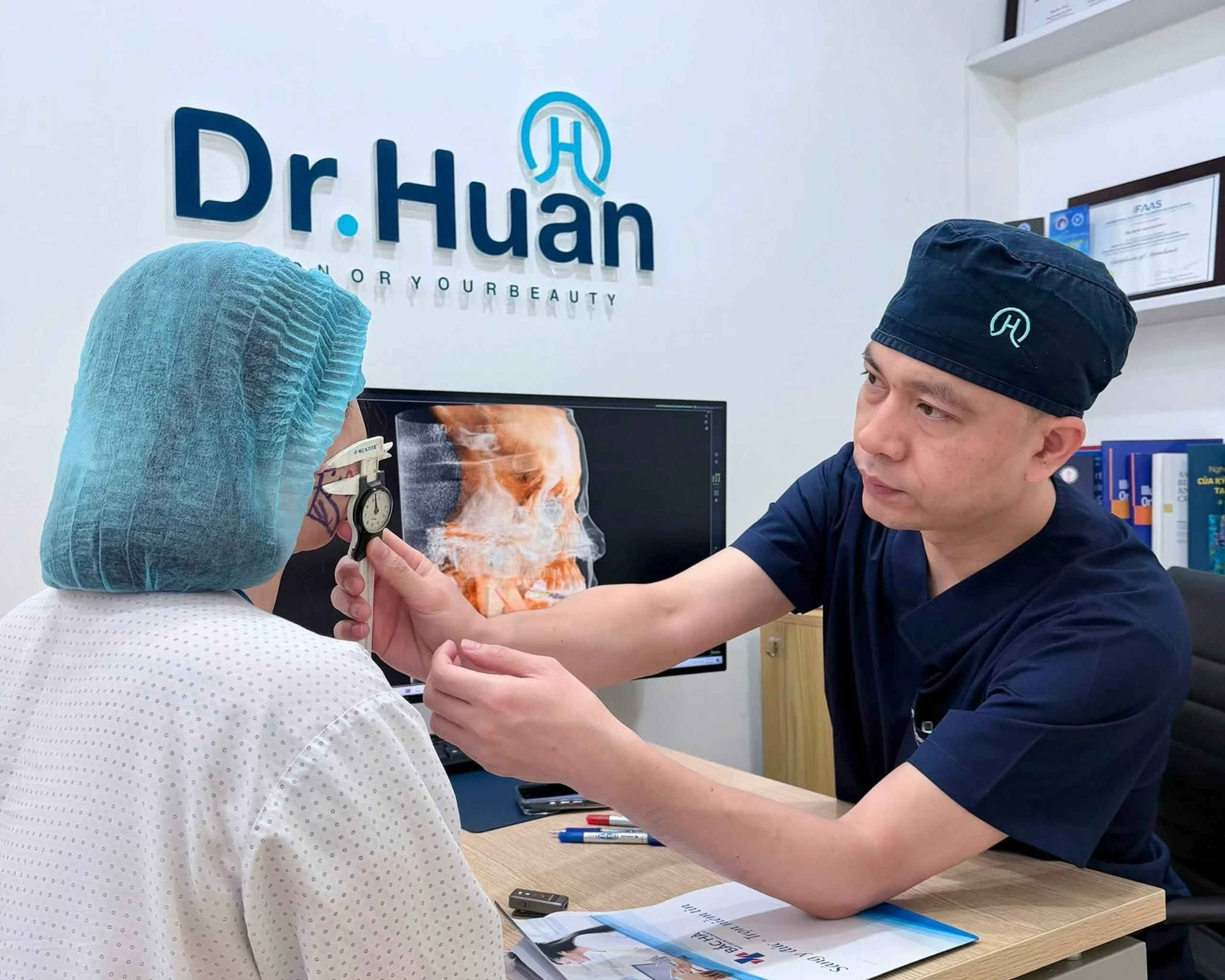
Dr. Nguyen Duy Huan personally examines each patient, evaluating the jawbone structure, skin elasticity, and degree of soft tissue sagging to develop an individualized surgical plan.
The extent of treatment is determined by the patient’s anatomy and aesthetic goals, avoiding unnecessary intervention.
Three key considerations guide the surgical planning process:
- Ramus-preserving mandibular angle reduction: Using 3D Cone Beam CT imaging, Dr. Huan analyzes the jawbone structure and determines the appropriate extent of reshaping. A ramus-preserving approach may be considered to maintain important skeletal structures while accounting for postoperative soft tissue changes, with the goal of achieving a slimmer, natural-looking jawline.
- Advanced facelift techniques: Depending on the degree of aging and location of tissue sagging, Dr. Huan evaluates the suitability of Midface lifting, Deep Plane facelift surgery, or jawline lifting. Appropriate techniques may focus on releasing and repositioning deeper facial tissues rather than simply tightening the skin.
- Carefully coordinated surgical planning: The surgeon evaluates the extent of treatment, anesthesia duration, overall health, and recovery capacity to determine whether the procedures should be combined or performed in stages.
For Dr. Nguyen Duy Huan, the value of combined surgery lies in selecting the right indications and achieving harmony between the underlying bone structure and facial soft tissues. The goal is to create a slimmer, more youthful appearance while preserving each patient’s natural facial characteristics.
Frequently asked questions about mandible reduction and facelift surgery
Is a facelift necessary after mandible reduction?
No. Mandible reduction does not automatically require facelift surgery. If the skin has good elasticity and there is no significant soft tissue sagging, mandible reduction alone may be sufficient to achieve the desired skeletal contour.
Do younger patients need a facelift when undergoing mandible reduction?
Most younger patients with firm skin and no significant signs of aging do not need a facelift simply because they are undergoing mandible reduction.
However, the surgeon must still assess skin elasticity and soft tissue condition before making a recommendation.
How long after mandible reduction can I undergo facelift surgery?
There is no fixed timeline that applies to every patient.
The surgeon must evaluate bone healing, swelling, and soft tissue stability. In some cases, reassessment after several months may help determine whether facelift surgery is necessary.
Is combining mandible reduction and facelift surgery more painful?
Combining the two procedures may increase discomfort during recovery because of the greater extent of surgical intervention.
Patients do not experience pain during surgery under general anesthesia. After surgery, the surgeon will prescribe appropriate pain medication and provide postoperative care instructions.
Do the results of mandible reduction and facelift surgery last?
Mandible reduction produces long-lasting changes to the underlying bone structure once healing is complete.
Facelift surgery can improve facial sagging for several years, but it does not stop the natural aging process.
The longevity of results varies depending on the surgical technique, individual characteristics, and aging process.
Is hospitalization required after combined mandible reduction and facelift surgery?
Yes. Because mandible reduction is performed under general anesthesia, patients require postoperative monitoring at an appropriately equipped medical facility.
The length of hospital stay depends on the extent of surgery, the patient’s health, and their recovery progress, as assessed by the surgeon.
Combining mandible reduction and facelift surgery may provide more comprehensive improvement to the lower face when both the underlying bone structure and soft tissues require correction.
However, achieving a successful aesthetic outcome is not about undergoing more procedures. It depends on identifying the right indications and choosing an appropriate level of intervention.
To determine whether mandible reduction alone is sufficient or a facelift should also be considered, patients can schedule a consultation with Dr. Nguyen Duy Huan for a personalized facial assessment and surgical treatment plan.
WhatsApp +84 916 262 888 / +84 986 258 118
