
Botox vs. mandible reduction: Which treatment is better for a slimmer face? The answer depends on whether a wide or square jawline is primarily caused by enlarged masseter muscles or prominent mandibular angles. Botox injections can help reduce muscle volume, while mandible reduction surgery directly reshapes the underlying bone structure.
In some cases, both the masseter muscles and mandibular bone contribute to a wide lower face. A surgeon may recommend a combined approach based on the patient’s anatomy, facial proportions, and treatment goals.

Should you get masseter Botox or mandible reduction?
Both masseter Botox and mandible reduction can improve the appearance of a square, prominent jawline or a wide lower face. However, these procedures target different anatomical structures. The appropriate treatment depends on whether the jawline width is primarily caused by the masseter muscles or the mandibular bone.
When is masseter Botox recommended?
Masseter Botox is suitable for patients whose jawline appears wide primarily due to enlarged masseter muscles, including those with:
- Masseter muscle hypertrophy that makes the jawline appear fuller or wider.
- Prominent masseter muscles when clenching the teeth.
- Enlarged masseter muscles associated with teeth grinding or excessive chewing activity.
- Relatively balanced mandibular bone structure but a wide lower face due to increased masseter muscle volume.
Botox reduces masseter muscle activity and volume, helping narrow the lower face. However, it does not alter the underlying bone structure, so its effectiveness is limited when jawline width is primarily caused by prominent mandibular angles.
When is mandible reduction surgery recommended?
Mandible reduction is suitable for patients whose wide, square, or prominent jawline is primarily caused by the mandibular bone structure, including:
- Wide mandibular angles that make the lower face appear broad.
- Square or low-positioned mandibular angles that create a less refined jawline.
- A wide mandibular border that is disproportionate to the overall facial structure.
- Differences in the shape or size of the mandibular angles between the two sides.
- A wide lower face primarily caused by bone structure that cannot be significantly improved by treatments targeting the masseter muscles.
Mandible reduction directly reshapes the mandibular angles and may include contouring the lower mandibular border to improve the appearance of the lower face.
Not every patient with a square or prominent jawline requires surgery. The surgeon must assess the mandibular bone, masseter muscles, and overall facial proportions to determine the appropriate treatment and extent of correction.
How to distinguish a wide jaw caused by masseter muscles from one caused by mandibular bone
A wide or square jawline may result from enlarged masseter muscles, prominent mandibular angles, or a combination of factors. Identifying the underlying cause helps determine the most appropriate treatment.
Characteristics of a wide jaw caused by enlarged masseter muscles
Masseter muscle hypertrophy increases muscle volume around the mandibular angles, making the lower face appear wider or more square.
Common characteristics include:
- Prominent masseter muscles when clenching the teeth.
- Increased fullness or outward bulging around the jaw angles during muscle contraction.
- A wide lower face despite relatively normal mandibular bone dimensions.
- A possible history of teeth grinding or habitual jaw clenching.
During the examination, the surgeon assesses the thickness and development of the masseter muscles to determine their contribution to jawline width.
Characteristics of a wide jaw caused by prominent mandibular angles
Wide or square mandibular angles can affect the contours of the lower face.
Common characteristics include:
- A wide lower face when viewed from the front.
- Mandibular angles that project outward on both sides.
- Square or low-positioned mandibular angles when viewed from the side.
- A wide lower mandibular border that appears disproportionate to the chin.
- Asymmetry in the mandibular bone structure.
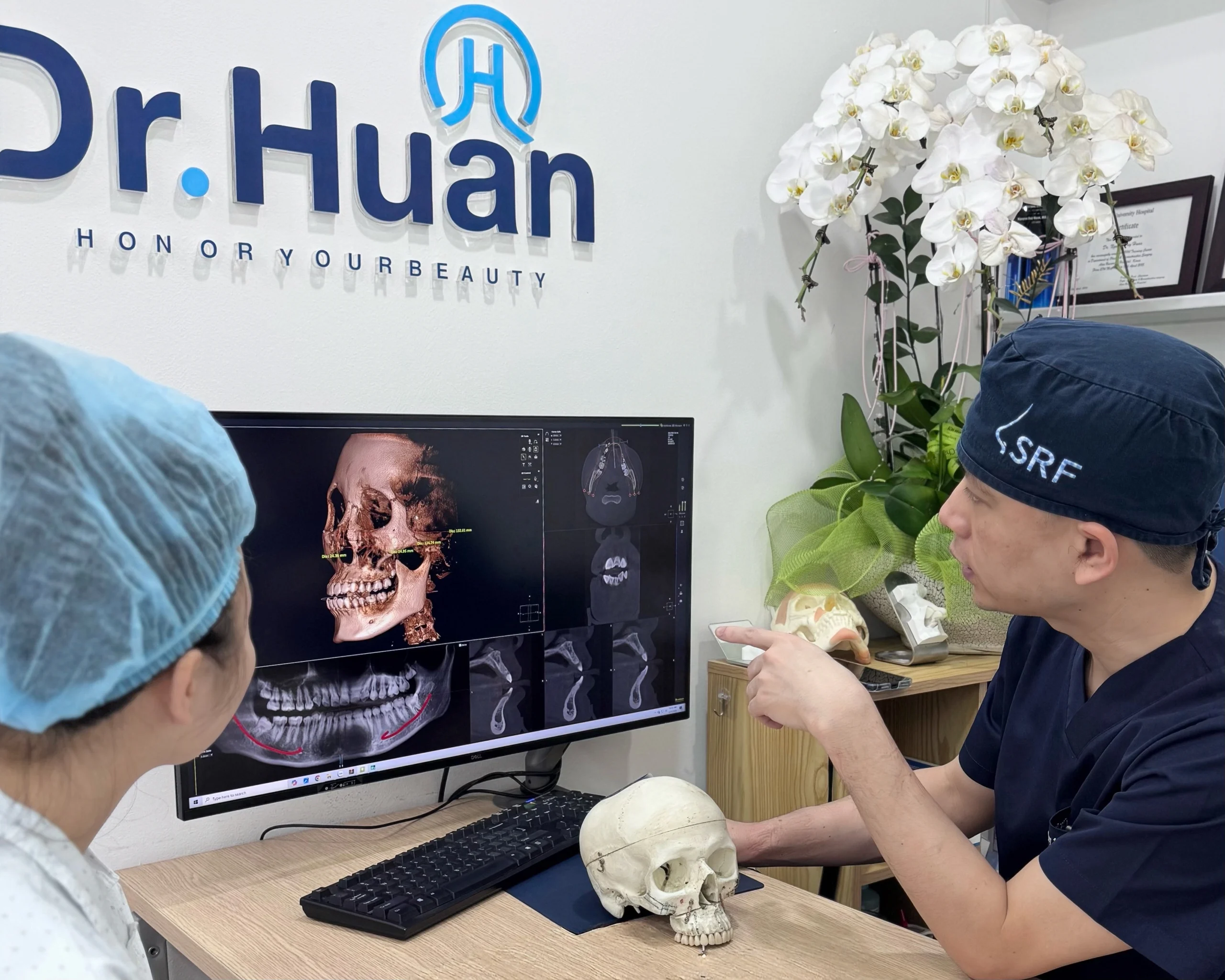
The surgeon may recommend a 3D cone-beam CT (CBCT) scan to assess the shape of the mandibular angles, lower mandibular border, and surrounding anatomical structures.
When both the masseter muscles and mandibular bone contribute to a wide jaw
In some patients, several anatomical factors contribute to a wide lower face, including:
- Wide or prominent mandibular angles.
- Masseter muscle hypertrophy that increases jawline width.
- Subcutaneous fat and soft tissue that add fullness to the lower face.
In these cases, the surgeon must assess the contribution of each structure to develop an appropriate treatment plan.
During mandible reduction surgery, partial reduction of hypertrophied masseter muscles may be performed when indicated. This approach allows the surgeon to address both mandibular bone width and excess muscle volume. Alternatively, masseter Botox may be considered depending on the patient’s muscle characteristics and treatment plan.
Botox vs. mandible reduction: What are the differences?
Masseter Botox and mandible reduction differ in their targeted anatomical structures, degree of invasiveness, recovery time, and duration of results.
The following table compares the main characteristics of both procedures.
| Criteria | Masseter Botox | Mandible reduction |
|---|---|---|
| Procedure type | Minimally invasive injectable treatment | Surgical reshaping of the mandibular bone |
| Target structure | Masseter muscles | Mandibular angles |
| Suitable candidates | Patients with a wide jaw primarily caused by enlarged masseter muscles | Patients with a wide jaw primarily caused by prominent mandibular angles |
| Mechanism | Reduces masseter muscle activity and volume | Directly reshapes the mandibular bone |
| Anesthesia | Usually does not require general anesthesia | Performed under general anesthesia |
| Procedure duration | Typically 10–20 minutes | Depends on the surgical technique and extent of correction |
| When results become visible | Gradual changes over the weeks following treatment | Jawline contours become more defined as swelling subsides and soft tissues stabilize |
| Duration of results | Temporary, usually lasting several months | Long-lasting changes to the bone structure |
| Recovery time | Usually short, with minimal disruption to daily activities | Several weeks for swelling to decrease and several months for gradual stabilization |
| Limitations | Cannot reshape the underlying bone | Mandible reduction alone does not directly reduce masseter muscle volume |
| Potential risks | Pain, bruising, chewing muscle weakness, asymmetry, or changes in smiling | Bleeding, infection, nerve injury, asymmetry, and anesthesia-related risks |
In general, masseter Botox is appropriate for patients who want to reduce masseter muscle volume without surgery. Mandible reduction is considered when the mandibular bone itself needs to be reshaped.
The decision should be based not only on the desired degree of facial slimming but also on anatomical characteristics, overall health, and individual treatment response.
Which lasts longer: masseter Botox or mandible reduction?
In terms of structural changes, mandible reduction generally provides longer-lasting results than masseter Botox. However, the duration of results is not the only factor determining which treatment is appropriate.
How long do masseter Botox results last?
After Botox injections, masseter muscle activity gradually decreases, leading to a reduction in muscle volume over time. Facial slimming effects typically become noticeable within several weeks and may continue developing over the following months.
The reduction in masseter muscle volume generally lasts several months, although results may persist longer depending on individual response. As the effects of Botox gradually wear off, muscle activity and volume may return.
Some patients may require repeat injections to maintain their results. However, repeated treatments should be evaluated by a qualified doctor to minimize the risk of excessive chewing muscle weakness or unwanted changes in facial contours.
How long do mandible reduction results last?
Mandible reduction directly changes the shape of the mandibular angles. Once the operated bone has healed and stabilized, these structural changes can be maintained over the long term.
However, facial contours may still change over time due to aging, weight fluctuations, and changes in soft tissue. The final aesthetic outcome also depends on the extent of bone reshaping, individual facial characteristics, and the healing process.
Read more: Is mandible reduction permanent? Does the jawbone grow back?
Can masseter Botox and mandible reduction be combined?
Masseter Botox and mandible reduction may be combined when both the mandibular angles and masseter muscles contribute to a wide lower face. Alternatively, the surgeon may perform partial reduction of hypertrophied masseter muscles during mandible reduction surgery when indicated.
Depending on the patient’s anatomy and degree of masseter muscle hypertrophy, the surgeon may consider the following approaches:
- Mandible reduction: Reshapes wide, prominent, or square mandibular angles to improve lower facial contours.
- Mandible reduction with partial masseter muscle reduction: Addresses both the mandibular bone structure and excess masseter muscle volume to reduce jawline width.
- Mandible reduction combined with masseter Botox: Reshapes the mandibular bone while using Botox to reduce masseter muscle volume when indicated.
Partial masseter muscle reduction may be performed during the same surgical procedure as mandible reduction. Botox injections, on the other hand, may be scheduled at an appropriate time depending on muscle characteristics and postoperative recovery.
How to choose the right treatment for your facial structure
To determine whether masseter Botox or mandible reduction is appropriate, the surgeon must assess the mandibular angles, masseter muscles, soft tissues, and overall facial proportions. Treatment selection should be based on the underlying cause of jawline width rather than external appearance alone.
At Dr Huan, Dr Nguyen Duy Huan personally examines patients and evaluates the following factors:
- Mandibular angles: Bone shape, width, and degree of prominence.
- Masseter muscles: Muscle thickness, volume, and degree of development.
- Soft tissues: Fat distribution and soft tissue volume in the lower face.
- Facial proportions: The relationship between the jawline, chin, cheekbones, and facial symmetry.
When necessary, Dr Huan may recommend a 3D cone-beam CT scan to assess the mandibular bone structure in detail and develop an appropriate treatment plan.
Based on the examination findings, Dr Nguyen Duy Huan identifies the factors contributing to a wide or prominent lower face and recommends masseter Botox, mandible reduction, or a combined approach when indicated.
Each treatment plan is tailored to the patient’s anatomical characteristics, with the goal of achieving balanced and harmonious facial contours.
Frequently asked questions about masseter Botox and mandible reduction
Does masseter Botox work for a wide jaw caused by bone structure?
If jawline width is primarily caused by prominent mandibular angles, masseter Botox generally has limited effectiveness because it cannot reshape the underlying bone.
However, if enlarged masseter muscles also contribute to the width, Botox may help reduce muscle volume and partially improve the appearance of the lower face.
Can repeated masseter Botox injections replace mandible reduction?
No. Repeated Botox injections can help maintain reduced masseter muscle volume, but they cannot change the shape of the mandibular bone.
If a square or prominent jawline is primarily caused by bone structure, the surgeon may consider a procedure that directly reshapes the mandibular angles when indicated.
Is masseter Botox necessary after mandible reduction?
Not every patient needs masseter Botox after mandible reduction.
If enlarged masseter muscles continue to contribute to lower facial width, the surgeon may consider additional Botox treatment.
The decision depends on the condition of the masseter muscles and the stability of the surgical area.
How can you tell whether a wide jaw is caused by muscle or bone?
A surgeon can assess the masseter muscles through a clinical examination, including observing changes around the jaw angles when the patient clenches their teeth.
When necessary, a 3D cone-beam CT scan may be recommended to evaluate the shape and dimensions of the mandibular bone.
Combining clinical examination with diagnostic imaging helps identify the underlying cause more accurately.
Can mandible reduction be combined with partial masseter muscle reduction?
Yes. When prominent mandibular angles and masseter muscle hypertrophy occur together, the surgeon may consider partial masseter muscle reduction during the same operation as mandible reduction.
The extent of muscle reduction must be determined based on the patient’s anatomy, degree of muscle hypertrophy, and the need to preserve chewing function.
Choosing between masseter Botox and mandible reduction depends on the underlying cause of a wide, square, or prominent lower face.
Masseter Botox is suitable for patients who need to reduce masseter muscle volume, while mandible reduction may be considered when the mandibular bone structure requires reshaping.
If both the masseter muscles and mandibular bone contribute to facial width, a combined treatment approach may be considered when clinically appropriate.
At Dr Huan, Dr Nguyen Duy Huan personally examines patients, assesses the mandibular bone structure, masseter muscles, and facial proportions, and recommends an individualized treatment plan based on each patient’s anatomical characteristics and aesthetic goals.
WhatsApp +84 916 262 888 / +84 986 258 118
