
Where should you get cheekbone reduction? A reputable provider should have a surgeon experienced in facial bone surgery, 3D CT imaging to evaluate the zygomatic bone and arch, a personalized surgical plan, appropriate anesthesia and surgical conditions, and a clear postoperative follow-up process.
Cheekbone reduction is a surgical procedure that directly modifies the zygomatic bone and zygomatic arch. Before surgery, the surgeon should identify the cause of prominent cheekbones or a wide midface, assess both bone structure and soft tissue, and determine the appropriate extent of correction for each face.

Where to get Cheekbone Reduction? 7 important criteria to consider
A reputable cheekbone reduction provider should meet key criteria related to the surgeon, 3D CT imaging, surgical planning, bone management, fixation materials, anesthesia, and postoperative care.
1. A surgeon experienced in facial bone surgery
The surgeon should have a clear understanding of the zygomatic bone and zygomatic arch, and assess their balance with the temples, cheeks, mandible, and chin before determining which areas need correction.
2. Accurate assessment of the cause of prominent cheekbones or a wide face
Prominent cheekbones may result from the zygomatic body, the zygomatic arch, facial asymmetry, or an imbalance with other facial structures.
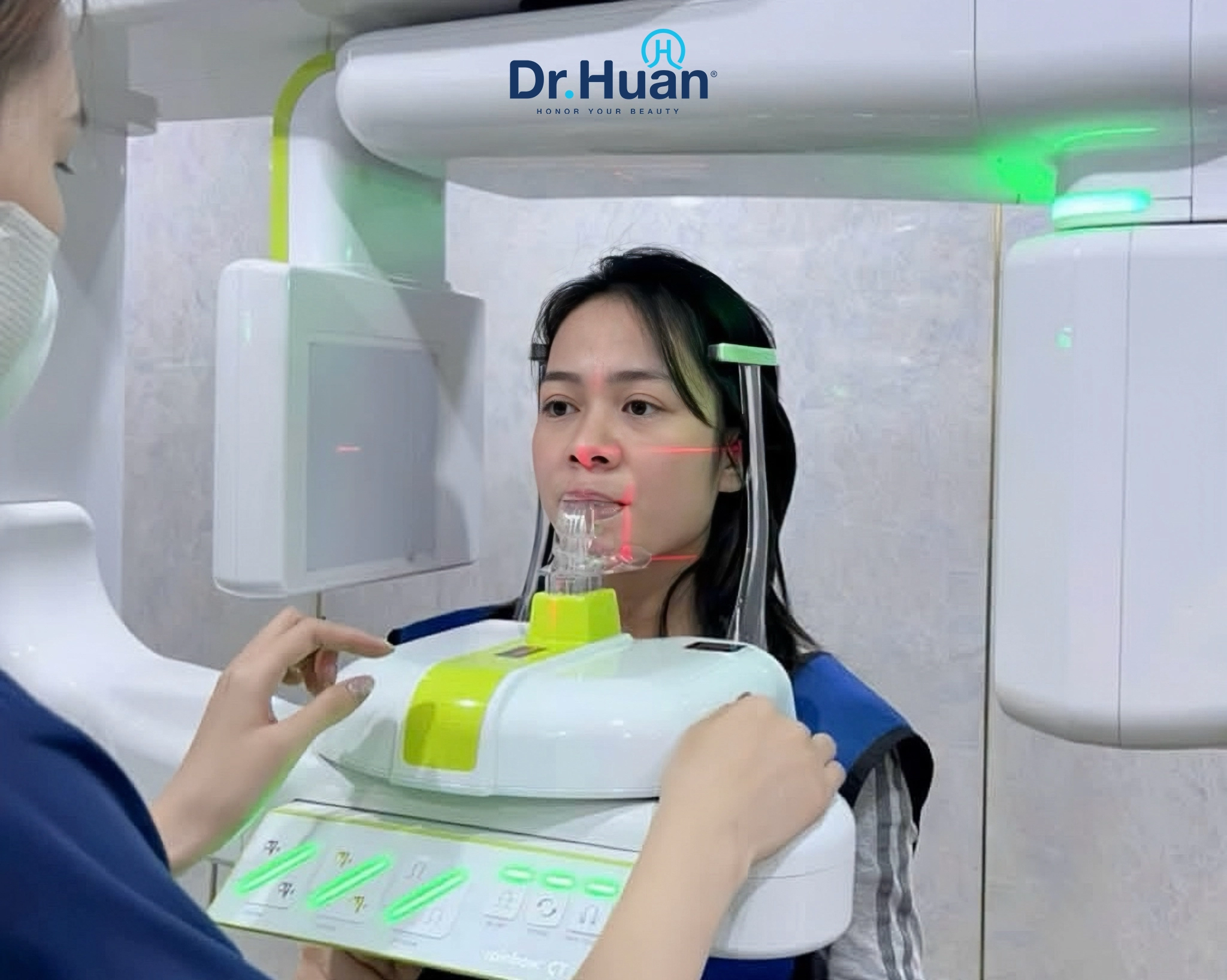
3. 3D Cone Beam CT imaging
3D Cone Beam CT helps evaluate the cheekbone structure, zygomatic arch, degree of asymmetry, and supports more precise surgical planning.
At Dr Huan, 3D CT imaging is used as part of the assessment and planning process for each individual case.
4. A personalized cheekbone reduction plan
Every patient has a different bone structure and facial proportion, so the extent of correction should be individualized.
The goal is not to reduce the cheekbones as much as possible, but to achieve the right degree of correction for a slimmer and more balanced face.
5. Appropriate bone management and fixation
After osteotomy, the zygomatic bone and arch need to be repositioned and stabilized according to the surgical plan.
Titanium plates and screws may be used to help stabilize the bone segments during healing.
6. Attention to soft tissue support
Changing the position of the cheekbone can affect the soft tissue of the midface.
For this reason, the surgeon should assess skin quality, soft tissue condition, and existing sagging before surgery.
7. Surgery at a properly equipped facility with clear postoperative care
Cheekbone reduction is usually performed under general anesthesia and should therefore take place at a facility equipped for surgery, anesthesia, recovery monitoring, and postoperative care.
Patients should also receive clear instructions regarding medication, wound care, diet, and follow-up visits.
What Makes Cheekbone Reduction at Dr Huan Different?
At Dr Huan, cheekbone reduction planning is based on direct examination, 3D CT imaging, and each patient’s facial structure.
The goal is not only to reduce cheekbone prominence, but also to balance the zygomatic arch, midface width, and soft tissue with the rest of the face.
Dr. Nguyen Duy Huan specializes in facial bone surgery
Dr. Nguyen Duy Huan has more than 20 years of experience in plastic, aesthetic, and maxillofacial surgery.
He directly examines each patient, analyzes the bone structure, and determines the appropriate extent of correction for the individual face.
3D CT analysis before and after surgery
3D Cone Beam CT helps evaluate the zygomatic bone, zygomatic arch, facial asymmetry, and areas requiring correction.
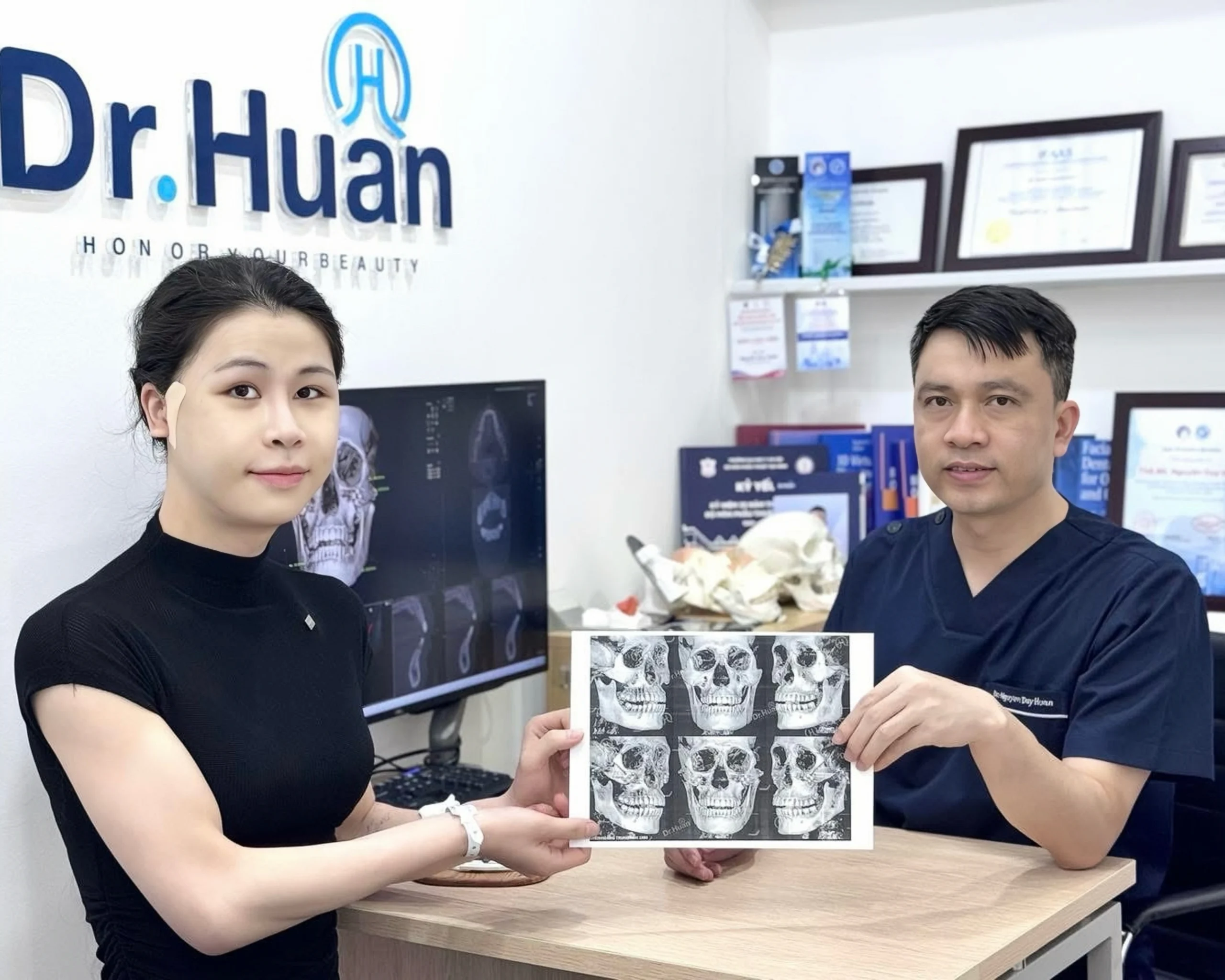
When postoperative CT scans are available, before-and-after imaging can also provide a direct comparison of changes in the underlying bone structure.
360° cheekbone reduction technique
At Dr Huan, 360° cheekbone reduction focuses on adjusting both the zygomatic body and zygomatic arch rather than only reducing the prominence of the front cheekbone.
The degree of correction is determined individually so the midface appears slimmer while remaining balanced with the temples, cheeks, jawline, and chin.
Modified L-shaped osteotomy technique
Dr. Nguyen Duy Huan is the lead author of a study on a modified L-shaped osteotomy technique published in The Journal of Craniofacial Surgery in 2026.
The study included 44 cases and reported an average reduction of 7.1 mm in cheekbone width after surgery. The actual degree of correction is still individualized according to each patient’s facial structure.
Personalized surgical guides and fixation plates
Dr Huan uses patient-specific surgical guides and fixation systems based on individual anatomical data to support control of the osteotomy line, direction of bone movement, and final fixation position.
Attention to midface soft tissue support
Cheekbone reduction planning at Dr Huan does not focus on bone alone.
Skin quality, soft tissue volume, and existing midface laxity are also assessed. Preservation and restoration of soft tissue support are considered to help reduce the risk of postoperative sagging.
Individualized degree of cheekbone reduction
At Dr Huan, the extent of correction is determined according to the zygomatic bone and arch, midface width, temples, mandible, chin, and soft tissue.
The goal is a slimmer facial contour that still looks natural and balanced.
Real Cheekbone Reduction Results at Dr Huan
When considering where to get cheekbone reduction, before-and-after patient photos provide useful visual information.
For cheekbone reduction, results should ideally be viewed from several angles. The frontal view helps assess changes in midface width, while the three-quarter view can better show changes in cheekbone projection.
When available, before-and-after 3D CT imaging can also be used to compare changes in the underlying bone structure.


(*) Aesthetic outcomes vary depending on each patient’s original anatomy and healing process.
Frequently Asked Questions About Choosing a Reputable Cheekbone Reduction Provider
Where can I get reputable cheekbone reduction in Hanoi?
A cheekbone reduction provider should not be evaluated based on brand name or advertising alone.
Patients should check who will actually perform the surgery, the surgeon’s experience in facial bone surgery, the use of 3D CT imaging, the surgical plan, anesthesia conditions, and postoperative follow-up.
In Hanoi, patients can consult directly with Dr. Nguyen Duy Huan for 3D Cone Beam CT evaluation of the zygomatic bone and arch before determining whether surgery is appropriate.
How can I tell whether a cheekbone reduction surgeon is qualified?
You can review the surgeon’s training, professional credentials, specialty, experience in facial bone surgery, actual cases, and academic work.
During consultation, the surgeon should be able to explain why the cheekbones appear prominent, which areas may need correction, the treatment goal, and the key considerations for your individual case.
Is 3D Cone Beam CT necessary for cheekbone reduction?
3D Cone Beam CT provides three-dimensional information about the zygomatic bone and arch and helps assess asymmetry between the two sides.
The surgeon can combine this imaging with direct examination to develop the surgical plan.
The specific imaging protocol should be determined according to each individual case.
Can cheekbone reduction cause facial sagging?
When the cheekbone position changes, the soft tissue support of the midface may also change.
The risk of sagging depends on several factors, including the amount of bone movement, surgical technique, soft tissue support, skin quality, age, and pre-existing soft tissue laxity.
For this reason, both bone and soft tissue should be assessed before determining the degree of cheekbone reduction.
How much does cheekbone reduction cost?
The cost of cheekbone reduction depends on the provider, surgeon, technique, surgical extent, and related services such as 3D CT imaging, anesthesia, laboratory tests, and postoperative care.
Patients should understand what is included in the total cost and should not use price as the only criterion when choosing a provider.
When deciding where to get cheekbone reduction, priority should be given to a surgeon experienced in facial bone surgery who can accurately assess the zygomatic bone and arch with 3D CT imaging and create an individualized treatment plan. Bone management, fixation stability, anesthesia conditions, soft tissue support, and postoperative care are also important factors to consider.
At Dr Huan, Dr. Nguyen Duy Huan personally examines each patient, analyzes the facial bone structure using 3D Cone Beam CT, and creates a personalized cheekbone reduction plan. If you are unsure whether your face requires cheekbone reduction, mandible reduction, or a combined approach, an in-person consultation can help determine which structures actually need correction before surgery.
WhatsApp +84 916 262 888 / +84 986 258 118
