
Is cheekbone reduction dangerous? Cheekbone reduction is a surgical procedure that directly modifies the zygomatic bones and arches. When performed for appropriate indications by a qualified surgeon at a licensed medical facility, surgical risks can be managed and minimized. However, the procedure still carries potential complications, including bleeding, infection, nerve injury, improper bone healing, and soft tissue sagging.
To minimize complications, it is essential to accurately assess the underlying bone structure and soft tissue condition and develop a surgical plan tailored to each patient’s facial anatomy. At Dr Huan, Dr. Nguyen Duy Huan emphasizes comprehensive examinations, detailed skeletal analysis, and individualized surgical planning to achieve balanced, natural-looking results while minimizing preventable surgical risks.

Is cheekbone reduction dangerous?
The risks associated with cheekbone reduction depend on the patient’s overall health, facial anatomy, and the extent of skeletal correction required. Patients with complex bone structures, underlying medical conditions, or a history of facial surgery may require more extensive preoperative evaluation.
During the procedure, the surgeon cuts, repositions, and fixes the zygomatic bones and arches in an anatomical region containing important blood vessels, nerves, and soft tissues. Therefore, surgical precision and careful management of these anatomical structures play a critical role in procedural safety.
Patients who are in good general health, have suitable skeletal anatomy, and undergo surgery based on thorough anatomical assessment are generally better positioned to minimize the risk of complications.
Conversely, undergoing surgery at a facility that does not meet appropriate medical standards, using unsuitable bone-cutting or fixation techniques, or neglecting preoperative health assessments can increase the risk of anatomical injury and negatively affect both function and aesthetic outcomes.
All surgical procedures carry inherent risks. In cheekbone reduction, appropriate patient selection, careful surgical planning, and adherence to established safety protocols are essential for managing and minimizing potential complications.
Potential risks and complications of cheekbone reduction
Cheekbone reduction may involve risks associated with blood vessels, nerves, soft tissues, bone healing, and aesthetic outcomes. Potential complications include:
- Bleeding, hematoma, and infection: During soft tissue dissection and bone repositioning, blood vessels may be injured, resulting in bleeding or hematoma formation. Infection may develop at the surgical incision or around the operated bone, particularly when sterile surgical conditions and postoperative care are inadequate.
- Nerve injury: Nerves in the cheekbone region may be affected during surgery, potentially causing numbness or reduced sensation in the cheeks, lower eyelids, or upper lip. Most temporary sensory disturbances improve over time, although severe nerve injuries may result in persistent symptoms.
- Bone nonunion or malunion: If bone segments are improperly positioned, inadequately stabilized, or experience complications during healing, nonunion or malunion may occur, potentially affecting facial structure and aesthetic results.
- Cheekbone asymmetry: Differences in the extent of bone cutting, repositioning, or fixation between the two sides may lead to facial asymmetry. However, uneven postoperative swelling can also create temporary asymmetry during the early recovery period.
- Soft tissue sagging and hollow cheeks: Repositioning the zygomatic bones changes the structural support of the midfacial soft tissues. In certain patients, particularly those with reduced skin elasticity or requiring extensive skeletal correction, cheek sagging or hollowing may develop.
- Unsatisfactory aesthetic results: Excessive cheekbone reduction may diminish natural midfacial projection, while insufficient correction may fail to adequately improve excessive cheekbone width or lateral prominence. Either outcome can affect overall facial harmony.
- Anesthesia-related complications: General anesthesia carries potential risks involving adverse drug reactions, airway management, respiratory function, and cardiovascular stability. Pre-anesthetic assessment, comprehensive health screening, and monitoring by a qualified anesthesia team help minimize these risks.
According to a systematic review published in Annals of Plastic Surgery in 2017, which analyzed 3,149 cheekbone reduction cases from 14 retrospective studies, reported complications included temporary sensory disturbances, soft tissue sagging, bone nonunion, facial asymmetry, and restricted mouth opening.
Temporary sensory disturbances were the most frequently reported complication in this analysis. However, the reported complication rates varied according to patient populations and surgical techniques and should not be interpreted as the exact risk for every individual undergoing cheekbone reduction.
It is important to distinguish surgical complications from normal postoperative reactions. Swelling, bruising, tightness, and mild sensory changes may occur during the initial recovery period. However, symptoms that persist, worsen, or appear unusual require prompt medical evaluation.
These complications do not occur in every cheekbone reduction procedure. Choosing a qualified surgeon, developing an accurate surgical plan, undergoing surgery at an appropriately licensed medical facility, and following postoperative instructions are essential measures for minimizing potential risks.
How to minimize the risks of cheekbone reduction surgery
Minimizing complications from cheekbone reduction requires careful management of patient selection, surgical techniques, operating conditions, and postoperative recovery.
Important preventive measures include:
- Comprehensive examination and appropriate surgical indications: Not everyone with high cheekbones or a wide face requires surgery. The surgeon must determine whether midfacial prominence or width results from skeletal anatomy, soft tissue characteristics, or a combination of factors. Patients whose cheekbones appear prominent because of hollow temples or sunken cheeks require careful assessment to avoid unnecessary bone reduction.
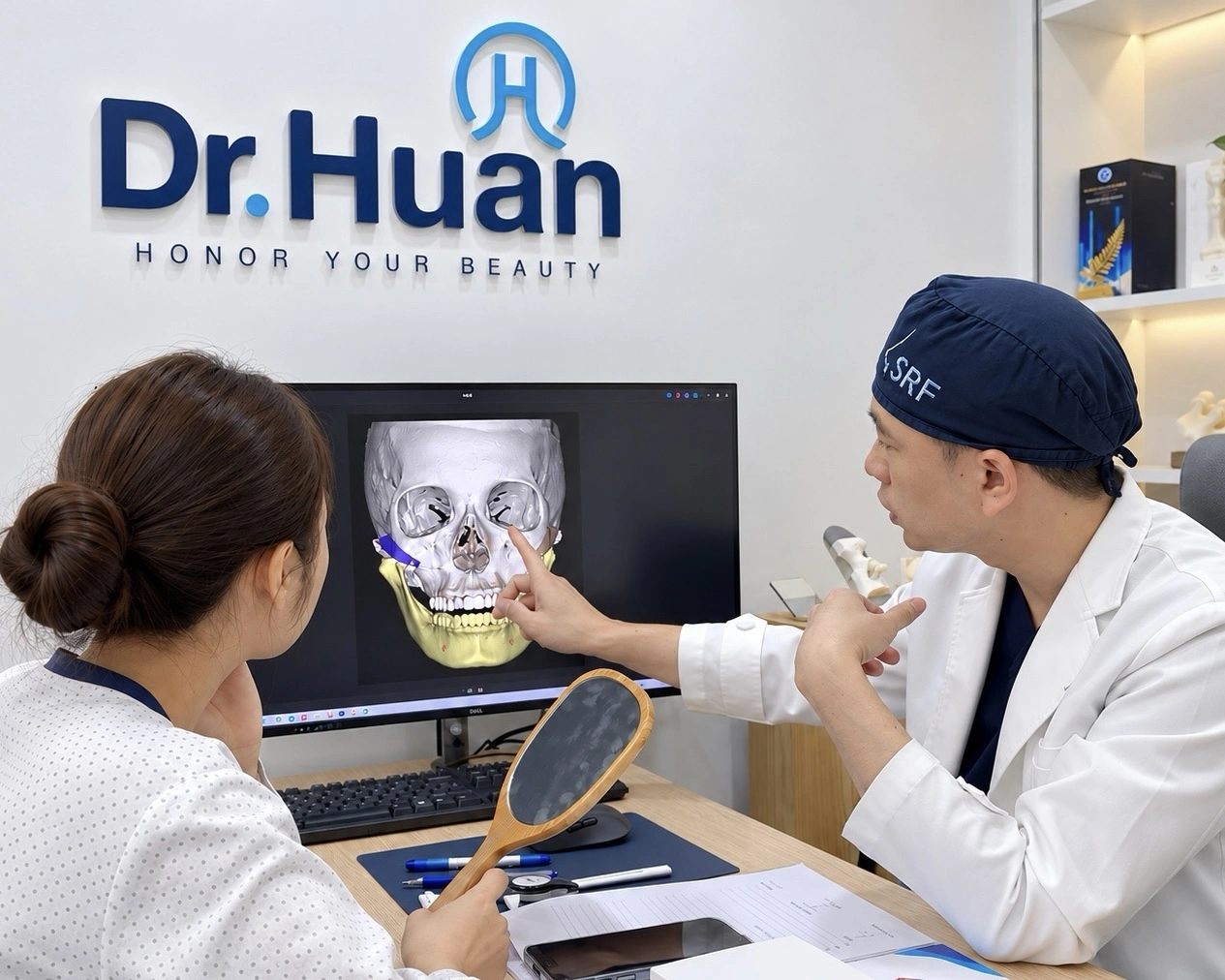
- 3D CT imaging and skeletal analysis: Maxillofacial CT imaging allows the surgeon to evaluate the shape of the zygomatic bones and arches, degree of prominence, facial asymmetry, and surrounding anatomical structures. Combined with direct clinical examination, these findings help determine the appropriate osteotomy sites, direction of bone repositioning, and fixation techniques.
- Choosing a surgeon experienced in maxillofacial bone surgery: Cheekbone reduction requires a detailed understanding of facial anatomy, blood vessels, nerves, and the relationship between skeletal structures and soft tissues. The surgeon’s expertise and experience are important for selecting suitable techniques, preserving critical anatomical structures, and managing unexpected intraoperative situations.
- Developing an individualized surgical plan: The extent of skeletal correction should be determined based on cheekbone prominence, midfacial width, bilateral symmetry, and soft tissue characteristics. Appropriate selection of osteotomy sites, repositioning techniques, and fixation methods helps minimize the risks of malunion, asymmetry, and undesirable changes in facial contours.
- Assessing and preserving soft tissues: The zygomatic bones provide structural support to the midfacial soft tissues. Before surgery, the surgeon should evaluate soft tissue thickness, skin elasticity, and any pre-existing sagging to determine the appropriate degree of skeletal correction. For patients at increased risk of soft tissue sagging, additional soft tissue procedures may be considered when clinically indicated rather than routinely combining facial rejuvenation techniques for all patients.
- Undergoing surgery at a properly licensed medical facility: Cheekbone reduction should be performed at a medical facility licensed to carry out the relevant surgical procedures and equipped with appropriate operating rooms, medical equipment, infection control measures, and anesthesia services. Patients must undergo preoperative health screening, anesthesia assessment, and evaluation of potential risk factors.
- Following postoperative care instructions: Patients should take prescribed medications as directed, maintain proper oral and surgical site hygiene, follow an appropriate diet, and avoid excessive pressure or trauma to the cheekbone region during bone healing. Scheduled follow-up appointments allow the surgeon to monitor recovery, assess bone healing, and identify potential complications early.
At Dr Huan, surgical risk management begins with establishing the correct indication and developing a treatment plan suited to each patient’s anatomy.
Dr. Nguyen Duy Huan carefully evaluates the zygomatic bone–arch complex, facial proportions, and soft tissue characteristics to determine the necessary extent of correction.
The goal is not only to improve excessively prominent or laterally projecting cheekbones but also to preserve important anatomical structures, minimize complications, and achieve harmonious, stable, long-term aesthetic results.
Frequently asked questions about cheekbone reduction safety
Can cheekbone reduction cause facial paralysis?
Cheekbone reduction carries a potential risk of injury to branches of the facial nerve during surgery, but this does not mean that the procedure will necessarily cause facial paralysis.
Motor nerve injury is an important potential complication. The level of risk depends on the patient’s anatomy, surgical approach, and techniques used.
If facial muscle weakness, mouth asymmetry, or abnormal facial movements occur after surgery, the patient should seek prompt medical evaluation.
Can cheekbone reduction damage nerves?
Yes, it is possible. Sensory nerves in the cheekbone and infraorbital regions may be affected during surgery.
Some patients may experience temporary numbness or reduced sensation after the procedure. Most cases improve over time, although persistent sensory disturbances remain a possible complication.
Does cheekbone reduction cause facial sagging?
Cheekbone reduction can alter the structural support of the midfacial soft tissues and may contribute to facial sagging in some patients. However, this complication does not occur in everyone undergoing surgery.
The risk depends on skin elasticity, soft tissue volume, the extent of bone repositioning, and the surgical technique.
A surgeon should carefully assess both the skeletal structure and soft tissues before recommending an appropriate treatment plan.
Can cheekbone reduction affect chewing function?
After surgery, patients may experience temporary tightness or restricted mouth opening due to swelling and the effects of surgery on the surrounding anatomical structures.
These symptoms generally improve during recovery.
However, persistent difficulty opening the mouth, worsening pain, or abnormal jaw movements should be evaluated by a surgeon to identify the underlying cause.
What warning signs require immediate medical attention after cheekbone reduction?
After surgery, patients should contact their surgeon or seek immediate medical attention if they experience:
- Heavy or uncontrolled bleeding.
- Rapidly increasing swelling, particularly when accompanied by unusual tightness.
- Difficulty breathing, difficulty swallowing, or signs of airway compromise.
- High fever, worsening pain, pus, or abnormal discharge.
- Severe headache, changes in vision, or altered consciousness.
- Facial muscle weakness or sudden neurological abnormalities.
These symptoms require prompt medical assessment rather than self-monitoring or attempting treatment at home.
Is cheekbone reduction dangerous? Cheekbone reduction is a surgical procedure that directly modifies facial bone structures and carries certain inherent risks, particularly when performed at medical facilities that do not meet appropriate professional and surgical safety standards. Accurate patient assessment, selection of a qualified surgeon, and individualized skeletal correction planning are essential for managing and minimizing potential complications.
At Dr Huan, Dr. Nguyen Duy Huan, with over 20 years of experience in aesthetic surgery, personally conducts consultations, evaluates facial bone structures, and develops individualized surgical plans with a strong emphasis on risk management and adherence to surgical safety standards.
If you are considering cheekbone reduction, you can schedule a consultation with Dr. Nguyen Duy Huan to have your facial anatomy assessed, determine the appropriate extent of correction, and receive professional guidance on the most suitable surgical approach before making a decision.
WhatsApp +84 916 262 888 / +84 986 258 118
