
Mandible reduction age requirements generally start at 18 for cosmetic surgery, provided that the jawbone has reached skeletal maturity and the patient’s overall health meets the necessary surgical conditions. However, turning 18 does not automatically mean everyone is eligible, as mandibular growth may continue beyond this age, particularly in males.
The appropriate age for mandible reduction should be determined based on skeletal maturity, facial anatomy, overall health, and a specialist surgeon’s assessment.

At what age can you undergo mandible reduction? Is there a difference between men and women?
Mandible reduction is a surgical procedure that reshapes the mandibular angle to improve a square, wide, or prominent jawline, creating a slimmer and more balanced lower face.
The minimum age for mandible reduction is not determined by separate fixed age thresholds for men and women, although the timing of jawbone maturity may differ between the sexes.
In females, jawbone growth generally stabilizes earlier, while males tend to experience a longer growth period, sometimes continuing beyond the age of 18. A study on facial growth in males aged 16 to 20 found that mandibular growth may continue during late adolescence and early adulthood.
However, this difference does not mean that women can automatically undergo mandible reduction at a younger fixed age than men.
Therefore, even after turning 18, patients should undergo a thorough assessment of skeletal maturity, facial anatomy, and overall health before receiving a surgical recommendation.
Is there an upper age limit for mandible reduction?
There is no universally established maximum age for mandible reduction surgery. Individuals in their 30s, 40s, or older may still be eligible if they have an appropriate surgical indication and are medically fit for the procedure.
However, older patients may require a more comprehensive assessment of underlying medical conditions, anesthesia-related risks, bone quality, and soft tissue characteristics.
In particular, skin elasticity and sagging in the lower face may influence the aesthetic outcome following jawbone reshaping.
Therefore, eligibility for mandible reduction in older adults should be determined by their overall health and facial anatomy rather than age alone.
Requirements for undergoing mandible reduction surgery
In addition to age, eligibility for mandible reduction depends on skeletal development, the underlying cause of a wide or prominent lower face, overall health, and individual facial characteristics.
The jawbone has reached skeletal maturity
Skeletal maturity is an important consideration, particularly for younger patients.
The surgeon must assess jawbone development through clinical examination and appropriate diagnostic imaging or other assessment methods.
If the mandible is still growing, cosmetic surgery may be postponed until skeletal development has stabilized to minimize the possibility of subsequent growth affecting the surgical outcome.
There is a clear indication for mandibular angle reduction
Not everyone with a square, wide, or prominent face requires mandible reduction surgery.
The appearance of a wide lower face may result from prominent mandibular angles, enlarged masseter muscles, cheek fat, soft tissue characteristics, or a combination of these factors.
If the width of the lower face is primarily caused by prominent mandibular bone, mandible reduction may be an appropriate option.
However, if the underlying cause involves enlarged chewing muscles or soft tissue, the surgeon will evaluate and recommend alternative treatments suited to the patient’s condition.
Overall health meets anesthesia and surgical requirements
Mandible reduction is performed under general anesthesia, so patients must undergo a comprehensive preoperative health assessment.
This evaluation includes reviewing medical history, current medications, cardiovascular and respiratory function, necessary laboratory tests, and a pre-anesthesia examination.
If a patient has underlying medical conditions or potential risk factors, the medical team must assess their severity and, when necessary, ensure that these conditions are adequately managed before proceeding with surgery.
Bone structure and soft tissues are suitable for the surgical plan
The extent of mandible reduction must be determined based on the shape of the mandibular angle, lower mandibular border, chin, cheekbones, and overall facial proportions.
The surgeon must also evaluate bone thickness, the course of the inferior alveolar nerve canal, and other relevant anatomical structures to establish an appropriate surgical approach.
Soft tissue characteristics, skin elasticity, and the ability of the tissues to adapt after bone reshaping should also be considered to achieve a balanced and natural-looking lower facial contour.
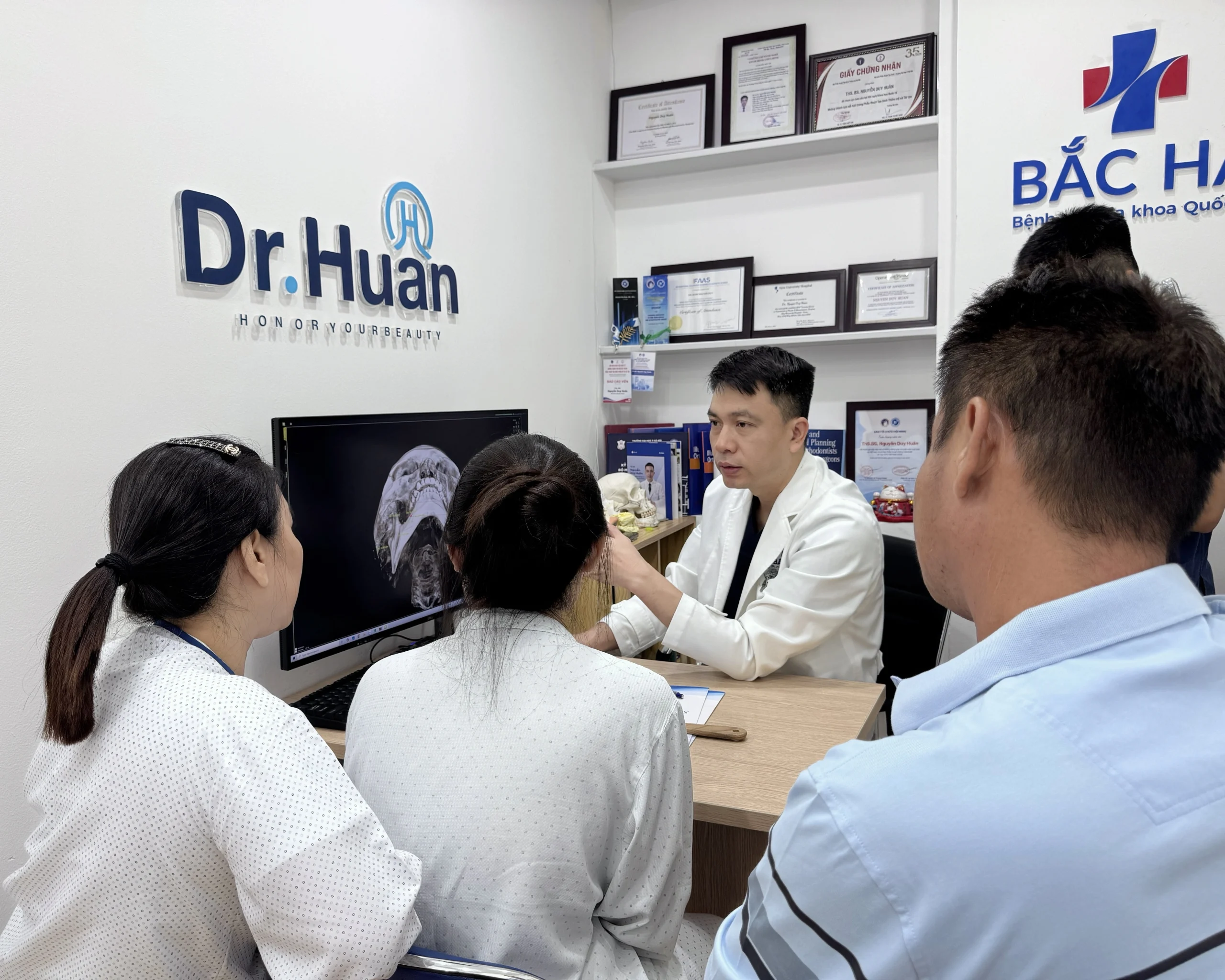
How does Dr Huan assess age requirements and eligibility for mandible reduction?
At Dr Huan, Dr. Nguyen Duy Huan personally conducts consultations, evaluates jawbone anatomy, and identifies the underlying causes of a wide or prominent lower face before recommending an appropriate surgical approach.
The assessment includes examining facial contours, analyzing the mandibular angle and lower mandibular border using 3D Cone Beam CT imaging, and evaluating soft tissue characteristics and relevant anatomical structures.
For younger patients, particular attention is given to skeletal maturity. If the jawbone has not fully developed, postponing surgery and continuing to monitor jaw growth may be the more appropriate approach.
Patients must also undergo a comprehensive health assessment and pre-anesthesia evaluation before surgery.
Based on these findings, Dr. Nguyen Duy Huan develops an individualized surgical plan designed to achieve balanced proportions between the jawline, chin, cheekbones, and overall facial contours.
Frequently asked questions about the age requirements for mandible reduction
Can a 16-year-old undergo mandible reduction?
At age 16, the mandible may still be developing, particularly in males. Therefore, mandible reduction for cosmetic purposes is generally not recommended at this age.
Individuals considering the procedure should consult a qualified specialist for an assessment of jawbone development and continue monitoring until skeletal growth has stabilized.
Can an 18-year-old undergo mandible reduction?
At age 18, individuals may begin to be considered for mandible reduction surgery.
However, the surgeon must confirm that the jawbone has reached skeletal maturity, that there is a clear indication for bone reshaping, and that the patient’s health meets the requirements for surgery.
Not everyone who has turned 18 is immediately eligible for the procedure.
Is 20 too young for mandible reduction?
Being 20 years old does not necessarily mean it is too early to undergo mandible reduction.
By this age, many individuals have reached a relatively stable stage of jawbone development.
However, skeletal maturity varies between individuals, so a professional assessment is still necessary before surgery.
Can a 40-year-old undergo mandible reduction?
Yes. Individuals aged 40 may still undergo mandible reduction if they have an appropriate surgical indication and meet the necessary health requirements.
In addition to evaluating bone structure, the surgeon must assess skin elasticity, soft tissue conditions, and healing capacity to develop a suitable surgical plan.
Can someone under 18 undergo mandible reduction with parental consent?
Parental consent alone does not automatically make someone under 18 eligible for cosmetic mandible reduction surgery.
The surgeon must evaluate skeletal development, overall health, and applicable legal requirements.
If the jawbone has not reached skeletal maturity, cosmetic surgery is generally postponed until growth has stabilized.
At what age can you undergo mandible reduction? Cosmetic mandible reduction is generally considered for individuals aged 18 and older. However, eligibility depends on skeletal maturity, overall health, and individual facial anatomy rather than age alone.
At Dr Huan, Dr. Nguyen Duy Huan personally assesses each patient’s jawbone structure and overall condition to determine the appropriate timing and surgical approach, ensuring that every treatment plan is tailored to achieve balanced facial proportions and long-lasting aesthetic results.
WhatsApp +84 916 262 888 / +84 986 258 118
