
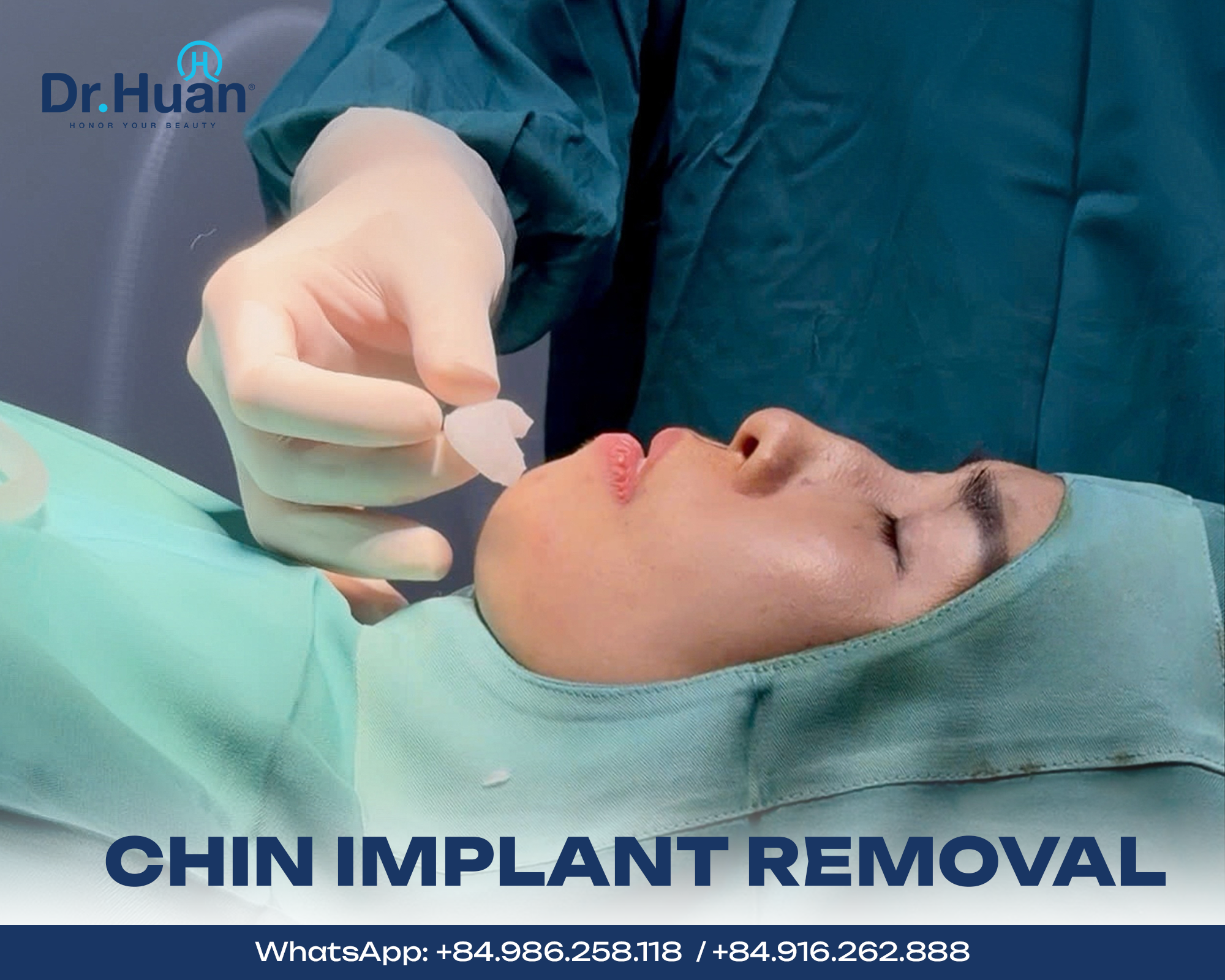
Chin implant removal is a surgical procedure to remove an implant that was previously placed in the chin. The procedure may be performed when the implant has shifted, become exposed, caused complications, created an unsuitable chin shape, or when the patient wishes to have the implant removed.
After removal, the chin may gradually return closer to its original shape, but it may not look exactly the same as it did before augmentation. The final chin shape depends on the underlying bone structure, the size of the implant, how long it has been in place, as well as the condition of the surrounding scar tissue and soft tissue.
What is chin implant removal?
Chin implant removal is a surgical procedure in which a previously placed artificial chin implant is removed. Depending on the condition of the chin, the surgeon may simply remove the implant or combine the procedure with treatment of the surrounding scar capsule, abnormal tissue, or other related issues.
Not every patient who is dissatisfied with the appearance of their chin after augmentation needs to have the implant removed. If the implant remains stable but the chin shape is not suitable, the surgeon will determine the underlying cause and decide whether repositioning or replacing the implant is appropriate. If the implant has shifted, become exposed, affected the surrounding soft tissue, or caused complications, the surgeon will assess the condition and determine whether removal is necessary.
Therefore, when evaluating a chin that has previously undergone implant augmentation, the key question is not only whether the implant should be removed, but also why the current chin shape is unsatisfactory and how the chin should be managed after removal.
When should a chin implant be removed?
Chin implant removal is generally indicated when there is a problem with the implant or surrounding tissues, or when the resulting chin shape is no longer suitable. Common situations include:
- Implant displacement, migration, or exposure: A change in implant position can cause chin asymmetry, deformity, or affect the surrounding tissues.
- An unsuitable chin shape: An implant that is too large, too long, or provides inappropriate projection may make the chin appear excessively long, pointed, or disproportionate to the rest of the face.
- Infection or abnormalities around the chin: Swelling, warmth, redness, increasing pain, drainage, or other persistent symptoms should be evaluated and treated by a doctor.
- Scar tissue, tissue contraction, or deformity: Changes in the scar capsule and soft tissue surrounding the implant can alter the shape of the chin.
- A desire to change the method of chin correction: The implant may be removed when the patient no longer wishes to keep it or wants to switch to another method of chin correction.
Depending on the cause and the condition of the chin tissues, the surgeon will determine whether to remove the implant alone, replace it, or perform another corrective procedure.
Will the chin return to its original shape after implant removal?
After chin implant removal, the chin gradually adapts to the absence of the implant. However, it cannot be assumed that the chin will return exactly to its pre-surgery appearance.
The extent to which the chin returns toward its original shape depends on several factors:
- How long the implant has been in place.
- The size and shape of the implant.
- The position of the implant.
- The condition of the surrounding scar capsule and soft tissue.
- The presence of inflammation, infection, or scar tissue adhesion.
- The original chin bone structure.
- The number of previous surgeries performed in the chin area.
Immediately after implant removal, the appearance of the chin does not represent the final result because the soft tissues may still be swollen and have not yet stabilized. Adequate healing time is therefore necessary before the long-term chin shape can be properly evaluated. For a broader understanding of how the chin changes during recovery, see the chin surgery recovery timeline.
How is chin implant removal performed?
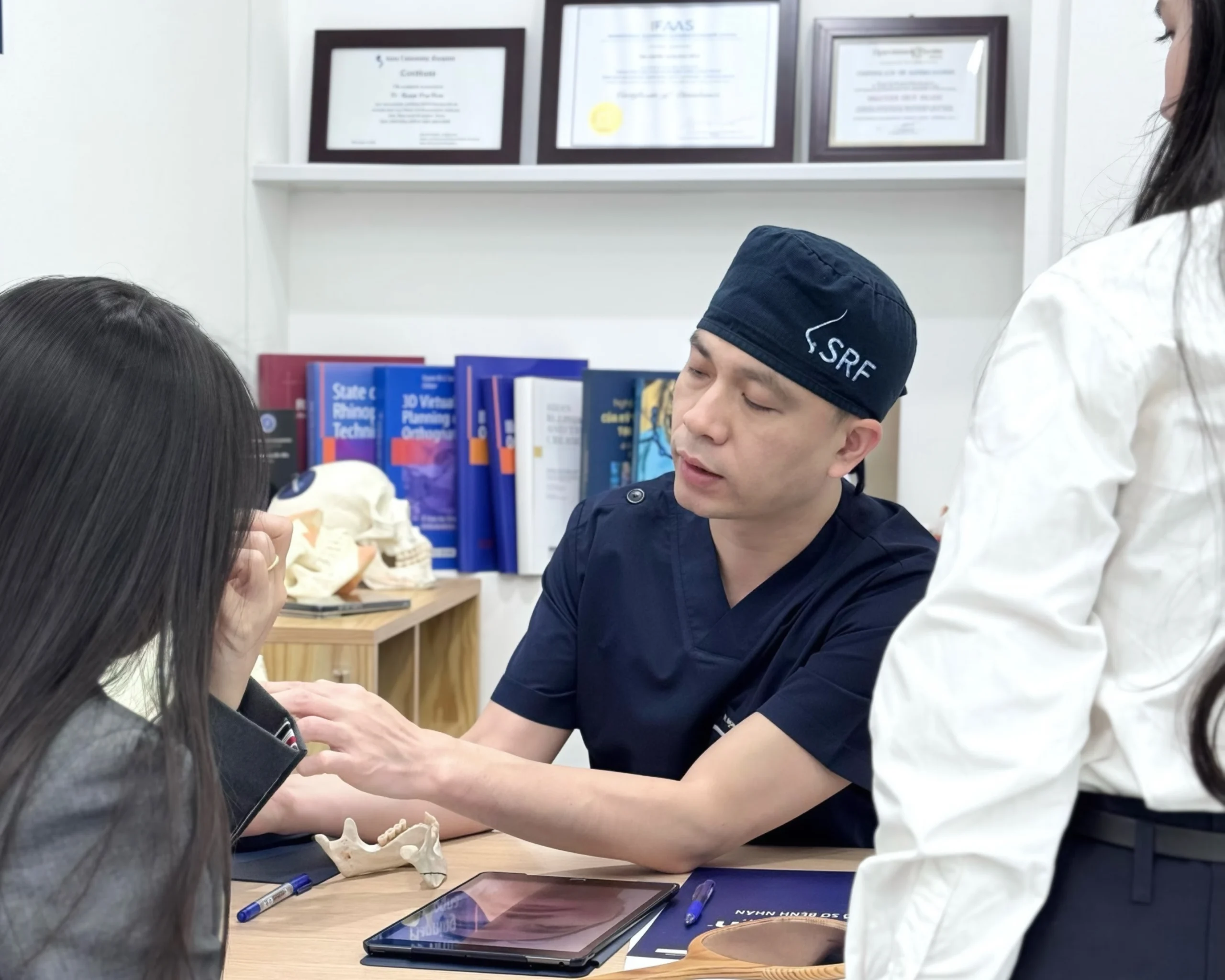
The chin implant removal procedure is planned according to the condition of the implant, surrounding soft tissues, and individual chin anatomy. The main steps include:
- Step 1: Examination and evaluation of the chin
The surgeon assesses the implant position, chin shape, soft tissues, and any abnormalities to determine the appropriate treatment plan. - Step 2: Preoperative health assessment and preparation
The patient undergoes the necessary medical evaluations to ensure they are suitable for surgery. - Step 3: Implant removal and treatment of the chin area
The surgeon accesses the implant pocket, removes the implant, and treats the scar capsule or abnormal tissue when necessary. - Step 4: Incision closure and postoperative follow-up
After surgery, the patient receives instructions on wound care, medication use, and scheduled follow-up visits to monitor the healing process.
Frequently asked questions about chin implant removal
How long does swelling last after chin implant removal?
Swelling is usually more noticeable during the early stage of recovery and gradually subsides as healing progresses. The exact duration varies depending on individual healing characteristics, tissue condition, and the extent of surgery. Cases involving scar tissue adhesion, inflammation, or more extensive revision may require a longer recovery period.
Does chin implant removal leave a scar?
The location of the incision depends on the surgical technique and previous procedures. When the implant is approached through an intraoral incision, the incision is located inside the mouth and therefore does not create an external skin scar at the incision site. The surgeon will select the appropriate surgical approach for each case.
Will my chin look shorter after implant removal?
After an implant that previously added projection or length is removed, the chin may appear shorter or less projected than it did with the implant in place. The degree of change depends on the original bone structure and the size of the implant that was used.
Can a chin implant be removed and replaced immediately?
In some cases, the existing implant can be removed and a new implant placed as part of the treatment plan. However, if infection, inflammation, or unfavorable tissue conditions are present, additional healing time may be required before another procedure is performed. The appropriate timing should be determined through a direct clinical examination rather than applying the same approach to every patient.
When should I see a doctor after chin implant surgery?
Seek medical evaluation if you experience increasing pain, unusual redness or swelling, drainage, fever, abnormalities around the surgical site, or obvious implant exposure or displacement. Early assessment can help determine the cause and appropriate treatment.
Chin implant removal is indicated when the implant is no longer suitable, has shifted or become exposed, complications have developed, or the patient wishes to change the method of chin correction. However, removing the implant does not necessarily mean that the chin will return completely to its pre-augmentation appearance.
For patients requiring revision after chin augmentation, it is important to determine whether the underlying issue involves the implant, soft tissue, or bone structure. MSc, MD Nguyen Duy Huan personally examines and evaluates the chin to determine the appropriate treatment plan, which may involve implant removal, implant replacement, or another corrective procedure based on the patient’s facial anatomy.
WhatsApp +84 916 262 888 / +84 986 258 118
Note: Aesthetic results may vary depending on each patient’s facial structure, individual characteristics, and healing process.
