
Chin augmentation using your own fat adds volume and enhances the contours of the chin without placing an artificial implant. Results depend on your chin anatomy, how much transferred fat survives and the degree of change you hope to achieve.
Before deciding, it helps to understand what chin fat transfer can improve, its limitations and how it differs from dermal fillers or chin surgery.
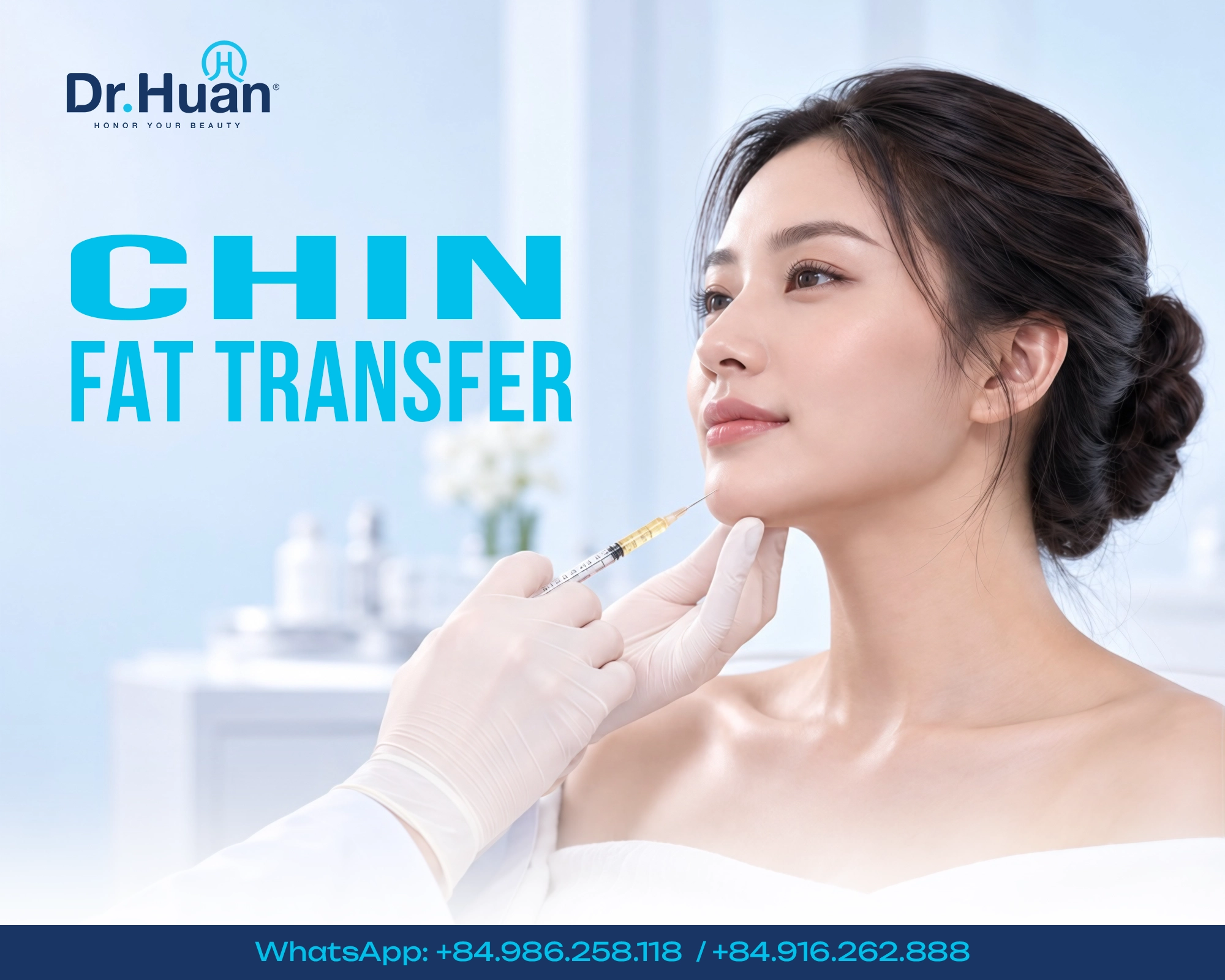
What is chin fat transfer?
Chin fat transfer, also called autologous fat transfer to the chin, involves removing fat from one area of your body, processing it and injecting it into the chin to add volume.
Common donor areas include the abdomen, hips and thighs. The aim is to restore soft tissue volume, fill shallow depressions and refine the chin’s contours.
Who is chin fat transfer suitable for?
Chin fat transfer may suit people whose chin lacks soft tissue volume or has slight hollows, and who want a natural-looking improvement. Candidates should be in good health, maintain a stable weight and have enough suitable fat available for transfer.
Your doctor will assess your chin anatomy, medical history and aesthetic goals before recommending treatment. If a recessed chin is primarily caused by the underlying bone structure, another approach may be more appropriate.
Benefits and limitations of chin fat transfer
Benefits
- Uses your own fat: Fat is taken from your body, without the need for an artificial chin implant.
- Enhances contours: Adding volume can give the chin a fuller, natural-looking appearance when the treatment is appropriate.
- Can provide lasting results: Fat that survives and becomes established can remain long term.
Limitations
- Final volume is difficult to predict: Some of the transferred fat may be reabsorbed.
- Additional treatment may be needed: This depends on how much fat remains and the desired improvement.
- Still involves an invasive procedure: Fat harvesting and injection can cause pain, swelling, bruising or small scars.
How long does chin fat transfer last?
Chin fat transfer can provide lasting results once the transferred fat has established itself. However, the amount of volume retained and how long the appearance lasts vary from person to person. Results depend on the technique, the body’s ability to retain the fat and changes in weight.
During the first few months, the chin may become less full as swelling subsides and some fat is reabsorbed. The appearance immediately after treatment is therefore not the final result; it can take several months to settle.
Not everyone needs regular touch-up treatments. Once the result has stabilised, your doctor will assess any remaining volume deficiency and discuss whether an additional fat transfer would help achieve your goals. A single fat survival rate or touch-up schedule should not be applied to every patient.
To help maintain your results, keep your weight stable, avoid sudden weight loss during recovery and attend follow-up appointments as advised.
Should you choose chin fat transfer, fillers or chin surgery?
The most suitable approach depends on your facial structure, the cause of the imbalance and how much change you would like to achieve.
| Treatment | What it can improve | Key considerations |
|---|---|---|
| Chin fat transfer | Adds soft tissue volume and fills areas of deficiency in the chin | Requires fat harvesting; additional treatment may be needed |
| Hyaluronic acid (HA) fillers | Add fullness and refine contours using an injectable filler | Results are temporary; injection-related complications remain possible |
| Chin implants | Increase projection and enhance chin shape | Require surgery and selection of an appropriate implant |
| Sliding genioplasty | Repositions the chin bone | Involves surgery on the bone and requires a thorough assessment |
If the chin needs a small amount of fullness because of a soft tissue deficiency, chin fat transfer or fillers may be suitable options. For a chin that is recessed because of its bone structure, or when a more noticeable change is desired, your doctor will assess whether surgery is appropriate. Sliding genioplasty is one surgical option that changes the position of the chin bone rather than simply adding soft-tissue volume.
Frequently asked questions about chin fat transfer
Can slim people have chin fat transfer?
Slim people may still be suitable for chin fat transfer if they have enough fat that can be safely harvested and meet the health requirements. Your doctor will assess the donor areas and the volume needed before recommending treatment.
Can chin fat transfer make the face look slimmer or reduce a double chin?
Chin fat transfer may improve facial balance when the chin lacks fullness, but it does not remove fat beneath the chin or reduce the size of the jawbone. If you also want to address a double chin, your doctor will assess the area and discuss suitable options.
Can chin fat transfer create a V-shaped chin?
Chin fat transfer can make the chin look fuller and more balanced, but it cannot create a V-shaped lower face in every case. The result also depends on your jawbone structure, existing chin shape and soft tissue.
Can transferred fat be dissolved like filler?
Transferred fat cannot be dissolved with the medication used to dissolve HA fillers. If your chin looks too full or uneven, or you notice firm lumps, arrange a follow-up appointment so your doctor can identify the cause and discuss appropriate treatment. Do not attempt to inject fat-dissolving products into the treated area yourself.
Chin fat transfer can create a fuller, more balanced chin when it is suitable for your needs. If you are exploring this treatment, speak with Dr Huan about the chin shape you would like to achieve. An individual assessment can help identify an approach that complements your facial features.
WhatsApp +84 916 262 888 / +84 986 258 118
Note: Aesthetic results may vary depending on each patient’s facial structure, individual characteristics, and healing process.
